
Georg Simon Ohm — The Physicist Who Made Electricity Calculable
Ohm discovered that current is proportional to voltage and inversely proportional to resistance — V = IR. Ridiculed by Germany's academic establishment, his law became the most fundamental equation in electrical science. The SI unit of resistance bears his name.
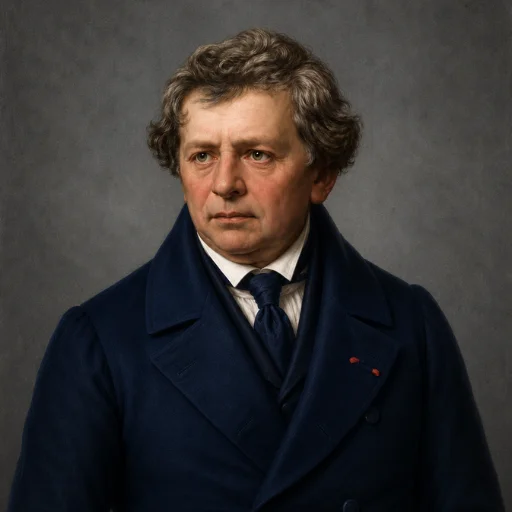
Quick Facts
- Full Name
- Georg Simon Ohm
- Born
- 16 March 1789, Erlangen, Bavaria (Holy Roman Empire)
- Died
- 6 July 1854, Munich, Bavaria (aged 65)
- Nationality
- German
- Fields
- Physics, Mathematics, Acoustics
- Institutions
- Jesuit Gymnasium Cologne, Polytechnic School Nuremberg, University of Munich
- Known For
- Ohm's Law (V = IR), Ohm's Acoustic Law
- Key Publication
- Die galvanische Kette, mathematisch bearbeitet (1827)
- Honours
- Copley Medal (1841), Foreign Member of the Royal Society (1842), Full Member of the Bavarian Academy of Sciences (1845), Professor of Physics at University of Munich (1852)
- Named After Him
- The ohm (Ω), SI unit of electrical resistance (adopted 1881)
Georg Simon Ohm was a German physicist and mathematician who discovered the most fundamental law in electrical science: that the current through a conductor is directly proportional to the voltage and inversely proportional to the resistance (V = IR). Published in 1827, Ohm's Law was initially ridiculed by Germany's academic establishment, costing him his teaching position and forcing him into years of poverty. Recognition came only in 1841 when Britain's Royal Society awarded him the Copley Medal. He spent the last five years of his life as a professor at the University of Munich — the position he had pursued for over three decades. The SI unit of electrical resistance, the ohm (Ω), was named in his honour in 1881.
Early Life and a Self-Taught Father
Georg Simon Ohm was born on 16 March 1789 in Erlangen, a university town in Bavaria, then part of the Holy Roman Empire. He arrived in the same year as the French Revolution — a period of political and intellectual upheaval that would reshape European science for decades.
His father, Johann Wolfgang Ohm, was a locksmith and master mechanic. His mother, Maria Elizabeth Beck, was a tailor's daughter who died when Georg was ten years old. Of the family's seven children, only three survived to adulthood: Georg Simon, his younger brother Martin (who became a distinguished mathematician), and their sister Elizabeth Barbara.
Although neither parent had formal education, Johann Wolfgang Ohm was a remarkable autodidact. He taught himself mathematics, physics, chemistry, and philosophy to a high level, and passed this knowledge to his sons through years of rigorous home instruction. The quality of this education was so striking that Karl Christian von Langsdorf, a professor at the University of Erlangen, compared the Ohm brothers to the famous Bernoulli family — a dynasty of Swiss mathematicians that produced eight prominent scholars across three generations.
Georg attended the Erlangen Gymnasium from ages 11 to 15, where the scientific instruction was poor — a sharp contrast with the inspired teaching he received at home from his father.
University, Failure, and Starting Over
A Wasted Opportunity at Erlangen
In 1805, at age 15, Ohm entered the University of Erlangen. Instead of applying himself, he spent his first three semesters dancing, ice skating, and playing billiards. His father, furious at the waste of opportunity, pulled him out and sent him to Switzerland.
Teaching and Self-Study in Switzerland
In September 1806, Ohm accepted a position as a mathematics teacher at a school in Gottstadt bei Nidau, Switzerland. When his former professor Langsdorf moved to Heidelberg University in 1809, Ohm hoped to follow and restart his studies there. Langsdorf advised against it, instead recommending that Ohm study independently through the works of Euler, Laplace, and Lacroix.
Reluctantly, Ohm followed this advice. He left his teaching post in March 1809 to become a private tutor in Neuchâtel, where he spent two years tutoring while continuing his private mathematical studies.
The Doctorate
In April 1811, Ohm returned to the University of Erlangen. His years of independent study had prepared him well — he earned his doctorate on 25 October 1811 and immediately joined the faculty as a lecturer in mathematics. The position paid poorly and offered little prospect for advancement.
The Long Road to a Laboratory
Poverty and Dead-End Teaching Posts
Ohm's early career was a cycle of financial hardship and unsatisfying positions. After three semesters at Erlangen, he resigned because he could not survive on his lecturer's salary. In January 1813, the Bavarian government offered him a post teaching mathematics and physics at a poor-quality school in Bamberg. Deeply unhappy, he began writing an elementary textbook on geometry to prove his abilities.
When the Bamberg school closed in February 1816, the government transferred him to another overcrowded school to help with mathematics teaching — another dead end.
The Geometry Book That Changed His Fortune
Ohm sent his completed geometry manuscript to King Wilhelm III of Prussia. The King was impressed enough to offer Ohm a position at the Jesuit Gymnasium of Cologne on 11 September 1817. This school had a strong reputation for science education and, crucially, a well-equipped physics laboratory.
For the first time in his career, Ohm had the instruments and space to conduct real experiments.
Discovering Fourier and Ørsted
During his years in Cologne, Ohm read voraciously. He worked through the leading French mathematicians — Lagrange, Legendre, Laplace, Biot, and Poisson — and then discovered the work of Joseph Fourier, whose Théorie Analytique de la Chaleur (1822) presented a complete mathematical theory of heat conduction. Fourier's approach — describing the flow of heat through materials using precise equations — became the template for Ohm's own thinking about electricity.
In 1820, Ohm learned of Hans Christian Ørsted's discovery that electric current creates a magnetic field. This breakthrough opened the door between electricity and magnetism, and inspired Ohm to begin his own electrical experiments in the Cologne laboratory.
The Discovery of Ohm's Law
First Experiments with a Voltaic Pile (1825)
In 1825, Ohm published his first paper on electricity, examining how the electromagnetic force produced by a wire decreased as the wire's length increased. His experimental setup was ingenious: he measured the deflection of a compass needle placed near a current-carrying wire, using this as a proxy for current strength. Ammeters had not yet been invented.
His power source was a voltaic pile — an early battery invented by Alessandro Volta. The results were frustratingly inconsistent. The problem, not obvious to researchers at the time, was that voltaic piles produce unstable voltage that drops under load.
The Thermocouple Breakthrough (1826)
Ohm's colleague Johann Christian Poggendorff suggested he try a thermocouple, a device based on Thomas Johann Seebeck's 1821 discovery that holding two different metals at different temperatures produces a stable voltage.
Ohm constructed a bismuth-copper thermocouple, immersing one junction in boiling water at 100°C and burying the other in ice at 0°C. This gave him a power source that delivered constant, reproducible voltage for over 30 minutes — a dramatic improvement over the voltaic pile.
Custom Torsion Balance
To measure the current, Ohm built his own torsion balance: a suspended magnetic needle that deflected proportionally to the strength of the current passing through a nearby wire.
Stable Thermocouple Source
Bismuth-copper junctions at 100°C and 0°C delivered constant, reproducible voltage for over 30 minutes — enabling the precise measurements that revealed the mathematical pattern.
Eight Systematic Measurements
With his stable source and custom instrument, Ohm systematically measured current through eight wires of different lengths and thicknesses. Despite primitive apparatus, his readings were remarkably precise.
In two papers published in 1826, Ohm gave a mathematical description of electrical conduction modelled directly on Fourier's study of heat conduction. These papers represented the first steps toward a comprehensive theory.
The Law — V = IR
Ohm's experiments revealed a fundamental relationship: for a given conductor, the current flowing through it is directly proportional to the voltage applied across it and inversely proportional to the conductor's resistance.
Where V is voltage (potential difference) in volts, I is current in amperes, and R is resistance in ohms (Ω). The equation can be rearranged to I = V/R or R = V/I — twelve total formulas when combined with the power equation P = VI.
Ohm drew a direct analogy to Fourier's work on heat: just as heat flows through a material in proportion to the temperature difference and inversely to the material's thermal resistance, electric current flows in proportion to the voltage difference and inversely to electrical resistance. The same mathematical structure describes both phenomena — a profound insight that unified two branches of physics under one equation.
The Book — Die galvanische Kette, mathematisch bearbeitet (1827)
In 1827, Ohm published his complete theory in a 245-page book titled Die galvanische Kette, mathematisch bearbeitet (The Galvanic Circuit Investigated Mathematically). The book opens with the mathematical background necessary to follow the argument — a section that was essential because most German physicists of the era worked in a non-mathematical, qualitative tradition.
Ohm presented his theory as one of "contiguous action" — the idea that electricity propagates between adjacent particles in a conductor, much as heat conducts through matter. He used the term "contiguous particles" to describe this mechanism, opposing the rival concept of "action at a distance."
This work marked the early beginning of circuit theory as a formal discipline, although circuit theory would not become a major field until the end of the 19th century.
Ohm was confident the book would earn him the university appointment he had pursued his entire career. He was wrong.
Rejection and the Years in the Wilderness
The Hostile Reception
The reception of Die galvanische Kette was devastating. German academic culture in the 1820s was dominated by the philosophical idealism of Georg Wilhelm Friedrich Hegel, which held that scientific truths could be deduced through pure reasoning and that experimental methods were inferior to philosophical argument. Ohm's mathematical, experiment-driven approach clashed directly with this philosophy.
"A Physicist Who Professed Such Heresies"
"A physicist who professed such heresies was unworthy to teach science."
— Johannes Schultz, German Minister of Education, persuaded by Georg Friedrich Pohl
Georg Friedrich Pohl, an influential physics professor in Berlin and adherent of Hegel's school, attacked the book viciously. Pohl rejected the very premise that experiments could yield scientific conclusions. He called Ohm's results "an unmistakable failure" and persuaded Johannes Schultz, the German Minister of Education, that Ohm was unworthy to teach. Other critics called the work "a web of naked fancies."
Resignation, Poverty, and Grief
Devastated by the feeling that his own superiors at the Gymnasium were offended by his publication, Ohm declared it impossible for him to retain his position. He resigned from Cologne and moved to Berlin, where he lived in his brother Martin's house. For the next several years, he scraped by tutoring privately and holding temporary positions at minor Berlin schools — what one biographer described as years of "mortification and grief."
The rejection was not purely intellectual. It was also social: German academic culture drew sharp lines between university professors and schoolteachers. Ohm was a Gymnasium instructor challenging the conclusions of university-based scholars, and they resented it. His brother Martin was simultaneously fighting his own battles with the German educational establishment, which further damaged Georg's standing.
In 1833, Ohm finally received a professorship at the Polytechnic School of Nuremberg — an improvement, but still far below the university position he believed his work deserved.
Belated Recognition
The Copley Medal and International Acclaim
While German academics dismissed Ohm's work, British and French scientists — who were more comfortable with quantitative, mathematical approaches to physics — began to recognise its importance through the 1830s.
The turning point came through Charles Wheatstone, the prominent British physicist and inventor, who drew the attention of the Royal Society of London to Ohm's work. In 1841, the Royal Society awarded Ohm its highest honour: the Copley Medal, for his "researches into the laws of electric currents."
In 1843, Wheatstone introduced the "Wheatstone bridge" circuit by explicitly crediting it to "the principles established by Ohm in his theory of the voltaic circuit" — a public endorsement that carried enormous weight.
Honours Flow at Last
He was also elected to the Accademia delle Scienze di Torino and made an honorary citizen of Nuremberg.
"Their support gave him courage which had previously been softened by mortification and grief."
— Georg Simon Ohm, dedicating his 1849 book to the Royal Society
The Lifelong Dream — A University Professorship
In 1849, Ohm was appointed curator of the Bavarian Academy's physics cabinet in Munich, and became professor of experimental physics at the University of Munich. In 1852, he received the full chair of physics at Ludwig-Maximilians-Universität München. He was 63 years old. The appointment he had pursued for over 30 years had finally arrived.
Beyond Electricity — Ohm's Acoustic Law
Decomposing Sound into Pure Tones
Ohm's scientific interests extended well beyond electrical circuits. In 1843, he published a major paper on acoustics in the Annalen der Physik und Chemie titled "Über die Definition des Tones" ("On the Definition of a Tone").
Ohm's Acoustic Law
Ohm proposed that the human ear perceives complex sounds by decomposing them into their individual sinusoidal (pure tone) components — frequencies that are integer multiples of a fundamental frequency. This principle applied Fourier's mathematical decomposition theorem directly to the physics of hearing.
The Dispute with Seebeck
The claim sparked a bitter dispute with the physicist August Seebeck, who argued that Ohm's assumptions about how the ear processes sound were not entirely correct. Seebeck's criticisms had merit — the reality of auditory perception is more complex than Ohm's model — but the core insight that complex sounds can be analysed as superpositions of pure tones was correct and became foundational to modern acoustics and signal processing. Fourier analysis of sound waves is used today in every audio codec, every music equaliser, and every speech recognition system.
The Scooped Discovery and Unfinished Work
In 1849, Ohm published the first volume of Beiträge zur Molecular-Physik (Contributions to Molecular Physics), with plans for three or four volumes exploring the internal dynamics of matter through mathematical principles. However, he abandoned the project when he discovered that a Swedish scientist was about to publish the same original discovery he had recorded.
"The episode has given a fresh and deep sense for my mind to the saying 'Man proposes, and God disposes.' The project that gave the first impetus to my inquiry has been dissipated into mist, and a new one, undesigned by me, has been accomplished in its place."
— Georg Simon Ohm
Ohm was working on a textbook on optics — Grundzüge der Physik als Compendium zu seinen Vorlesungen — when he died. It was published posthumously in 1853–1854, incomplete.
Death and Legacy
Georg Simon Ohm died on 6 July 1854 in Munich, at the age of 65. Contemporary accounts attributed his death to an "apoplectic attack" — likely what modern medicine would describe as a cerebral haemorrhage or stroke. He was buried in the Alter Südfriedhof (Old South Cemetery) in Munich, where his grave remains accessible to visitors.
He was a lifelong Protestant who signed his personal letters with the expression "Gott befohlen, G S Ohm" — "Commended to God." He never married and had no children.
The Ohm Unit (Ω)
In 1881, 27 years after Ohm's death, the International Electrical Congress in Paris officially named the unit of electrical resistance the "ohm" (symbol: Ω) in his honour. One ohm is the resistance between two points of a conductor when a constant potential difference of 1 volt produces a current of 1 ampere.
Before the ohm was standardised, several competing units of resistance existed across different countries, driven by the rapid growth of telegraphy. In 1884, Germany adopted a "legal ohm" as a national standard. The ohm remains one of the most commonly used SI derived units in electrical engineering and physics worldwide.
Henry Cavendish — The Unknown Prior Discoverer
The English scientist Henry Cavendish had independently discovered the proportionality between current and voltage as early as January 1781 — 46 years before Ohm's publication. However, Cavendish was a notorious recluse who never published his electrical experiments. His work remained entirely unknown until James Clerk Maxwell edited and published Cavendish's papers in 1879 — a quarter-century after Ohm's death.
"The first verifier of Ohm's Law."
— James Clerk Maxwell, describing Cavendish
Because Ohm discovered the relationship independently and published it first, the law rightly bears his name.
Impact on Electrical Engineering and Modern Technology
Ohm's Law was the first mathematical relationship established in the science of electricity. Without it, the subsequent development of electrical engineering would have been impossible.
Kirchhoff's Extension
Within two decades, Gustav Kirchhoff extended Ohm's work with his circuit laws (1845), governing complex circuits with multiple loops and power sources.
Maxwell's Electromagnetic Field
James Clerk Maxwell later incorporated Ohm's law as a foundational relation in his electromagnetic field equations.
Every Electronic Device
Every circuit designed today — from smartphone processors containing billions of transistors to continental power grids — relies on calculations tracing directly back to Ohm's 245-page book published in 1827.
The telephone, electric lighting, the transistor, the computer, and every electronic device ever built depends on the relationship V = IR.
Commemorations
Ohm's legacy is honoured across Germany and internationally. The Technical University of Nuremberg (Georg-Simon-Ohm-Hochschule), the Erlangen Academy, and the Cologne Vocational College all bear his name. His bust stands in the Ruhmeshalle (Hall of Fame) in Munich. A statue of Ohm is displayed in Munich, and a memorial by sculptor Wilhelm von Rümann stands at the Technical University of Munich.
A 1994 German postage stamp commemorated his discovery as part of a series honouring famous German scientific achievements. The large symbol Ω on the plinth of his Munich statue serves as a permanent reminder that the unit of electrical resistance carries his name worldwide.
Published Works
Published in His Lifetime
- Grundlinien zu einer zweckmäßigen Behandlung der Geometrie (Guidelines for Geometry Teaching, 1817)
- Die galvanische Kette, mathematisch bearbeitet (The Galvanic Circuit Investigated Mathematically, 1827)
- Über die Definition des Tones (On the Definition of a Tone, 1843)
- Beiträge zur Molecular-Physik, Vol. 1 (Contributions to Molecular Physics, 1849)
- Erklärung aller in einaxigen Krystallplatten… (Interference Phenomena in Crystals, 1852–1853)
Published Posthumously
- Grundzüge der Physik als Compendium zu seinen Vorlesungen (Fundamentals of Physics, 1853–1854, incomplete)
- The Galvanic Circuit Investigated Mathematically (English translation by William Francis, 1891)
Life Timeline
Frequently Asked Questions About Georg Ohm
What is Ohm's Law?
Ohm's Law states that the electric current flowing through a conductor is directly proportional to the voltage applied across it and inversely proportional to its resistance. The formula is V = IR, where V is voltage in volts, I is current in amperes, and R is resistance in ohms (Ω). It applies to linear (ohmic) conductors at constant temperature and is the most fundamental equation in electrical circuit analysis.
When was Ohm's Law discovered?
Ohm conducted his key experiments in 1825 and 1826, switching from an unreliable voltaic pile to a stable bismuth-copper thermocouple in 1826. He published the complete theory in 1827 in his book Die galvanische Kette, mathematisch bearbeitet. However, the law was not widely accepted until the early 1840s, when British scientists — particularly Charles Wheatstone and the Royal Society — recognised its significance and awarded Ohm the Copley Medal in 1841.
Why was Ohm's Law rejected initially?
German academic culture in the 1820s was dominated by Hegelian idealism, which valued philosophical reasoning over experimental evidence. Ohm's mathematical, experiment-based approach was attacked by influential figures like Georg Friedrich Pohl, who called his work "an unmistakable failure." The German Minister of Education was persuaded that Ohm was "unworthy to teach science." The hostility forced Ohm to resign his position at Cologne and live in poverty for years. British and French scientists, who were more receptive to quantitative methods, recognised his work first.
What is the ohm unit?
The ohm (symbol: Ω) is the SI derived unit of electrical resistance, officially named after Georg Ohm in 1881 at the International Electrical Congress in Paris. One ohm is the resistance that produces a current of 1 ampere when a voltage of 1 volt is applied. A typical household copper wire has a resistance of fractions of an ohm per metre, while a standard incandescent light bulb filament has roughly 100–200 Ω when hot.
Did Ohm discover anything besides Ohm's Law?
Yes. In 1843, Ohm proposed what is now called Ohm's acoustic law — the principle that the human ear decomposes complex sounds into individual sinusoidal (pure tone) components whose frequencies are integer multiples of a fundamental frequency. Although his model was later refined by August Seebeck and others, the core idea that complex waveforms can be analysed as sums of pure frequencies became foundational to modern acoustics, signal processing, and audio engineering. He also published work on molecular physics, crystal optics, and interference phenomena.
Did Henry Cavendish discover Ohm's Law first?
Henry Cavendish independently discovered the proportionality between current and voltage in 1781, 46 years before Ohm. However, Cavendish was a recluse who never published his electrical experiments. His work was entirely unknown until James Clerk Maxwell published Cavendish's papers in 1879 — 25 years after Ohm's death. Maxwell noted that Cavendish was "the first verifier of Ohm's Law." Because Ohm discovered and published the law independently, it bears his name.
Where is Georg Ohm buried?
Ohm is buried in the Alter Südfriedhof (Old South Cemetery) in Munich, Germany. His grave is still accessible to visitors. His bust is displayed in the Ruhmeshalle (Hall of Fame) in Munich, and a memorial by sculptor Wilhelm von Rümann stands at the Technical University of Munich.
What is the relationship between Ohm's Law and Kirchhoff's Laws?
Gustav Kirchhoff formulated his circuit laws in 1845, directly extending Ohm's work to handle complex circuits with multiple loops and power sources. Kirchhoff's voltage law (the sum of voltages around any closed loop equals zero) and current law (the sum of currents entering a junction equals the sum leaving it) both rely on Ohm's Law as their foundation. Together, Ohm's and Kirchhoff's laws form the complete mathematical framework for analysing any DC circuit. Kirchhoff himself acknowledged that his work was built on the principles Ohm established.